
Finding Jacksonville Residents by Record
Jacksonville does not have one complete public roll of everyone who lives here. Start with an address when one is available. The USPS ZIP Lookup standardizes the mailing address, then the Onslow GIS map identifies the parcel, its PIN or PARID, city or ETJ context, and the current deed book and page. Tax Search supplies a separate owner and situs path. Those records point to an owner or a recorded party, not automatically a person who occupies the property.
For a name, decide what needs checking. A registered-voter result, a court index, an old directory entry, and a certificate request each answer different questions. A name match is only a lead. Compare the name with a second detail such as county, address, year, parcel, or documented relationship before treating two entries as the same person.
- Normalize the Jacksonville address and ZIP, then use GIS to confirm the actual county, city, ETJ, or military geography.
- Use the property and tax record for the parcel, situs address, owner field, and current deed reference.
- Follow the deed reference in the Register of Deeds index when ownership or an earlier transfer matters.
- Use the state voter lookup or NC Courts only for the specific public record question at hand.
- For an older household, check the Tucker Littleton Room, DigitalNC, newspapers, census resources, and Archives routes.
Note: A county record can identify a party or owner without proving that the person currently lives at the Jacksonville address.
Jacksonville Resident Records Offices
Most Jacksonville resident research leads to an Onslow County custodian. The Register of Deeds keeps recorded land instruments and local vital-record routes. The Tax Office and GIS team connect addresses, parcels, maps, and assessment fields. The Board of Elections maintains voter access routes, while the Clerk holds county court files. A portal can be useful, but a counter, phone call, mail request, or public-record request may be the route when an image, older book, or certified copy is not online.
Onslow County Register of Deeds
602 Anne Street
Jacksonville, NC 28540
910-347-3451
Onslow Tax Office and GIS
234 NW Corridor Boulevard
Jacksonville, NC 28540
910-989-2202
Onslow Board of Elections
246 Georgetown Road
Jacksonville, NC 28540
910-455-4484
When a record is not online, the custodian still matters. The ROD counter handles older deed books and certificate rules, the Board can route a voter record request, and the Clerk keeps the county file behind a court-index result. Jacksonville city offices can route municipal matters, but city limits and ETJ do not control every nearby address.
Jacksonville Parcel Fields Before Names
Read the parcel before reading a person into it. Onslow GIS can show the physical address, owner mailing address, PIN or NCPIN, PARID, current deed book and page, legal description, township, neighborhood, zoning, sales information, and map geometry. The Tax Search and property card add tax account and assessment context. Mailing address is where the tax owner receives correspondence. Situs is the physical property location. Neither field alone proves current occupancy.
- Parcel or PARID
- An assessment identifier that joins the tax record, GIS view, and deed research.
- Situs address
- The physical location of a parcel, which can differ from an owner's mailing address.
- Index
- A searchable pointer to a record, not necessarily the original image or a certified copy.
- Resident roll
- A record set that can show a person in a defined context, such as registration, ownership, or a directory edition.
Jacksonville addresses may cross municipal limits, unincorporated Onslow County, a postal place, or military geography. GIS layers for ZIP codes, city limits, ETJ, townships, and address points help establish which office has jurisdiction. The detailed address route belongs on the Jacksonville by-street directory.
Jacksonville Tax Search Fields
Onslow Tax Search help documents several useful entry points. No basic field is required, and the basic modes sort results by owner. For an owner query, enter last and first names separated by a space, without a comma. Address search separates house number, street name, and street type, then offers Exact, Begins With, and Contains matching. A street name and type can return more than one address.
| Tax Search field | Entry type | Format or option |
|---|---|---|
| Property Owner Name | Text | Last first, no comma |
| Parcel Number | Text | Full value or beginning value |
| Property Address | Text and dropdowns | House, street, type; Exact, Begins With, or Contains |
| Street Type | Dropdown | Choose the displayed street type |
| Map Number | Text | Full or beginning value; punctuation matters |
The page describes current property data, not a historical household directory, and no stable historical coverage cutoff was found in the official source. Use a deed, a dated directory, or a tax-year-specific record when the question concerns a past Jacksonville resident.
Jacksonville Voter Record Limits
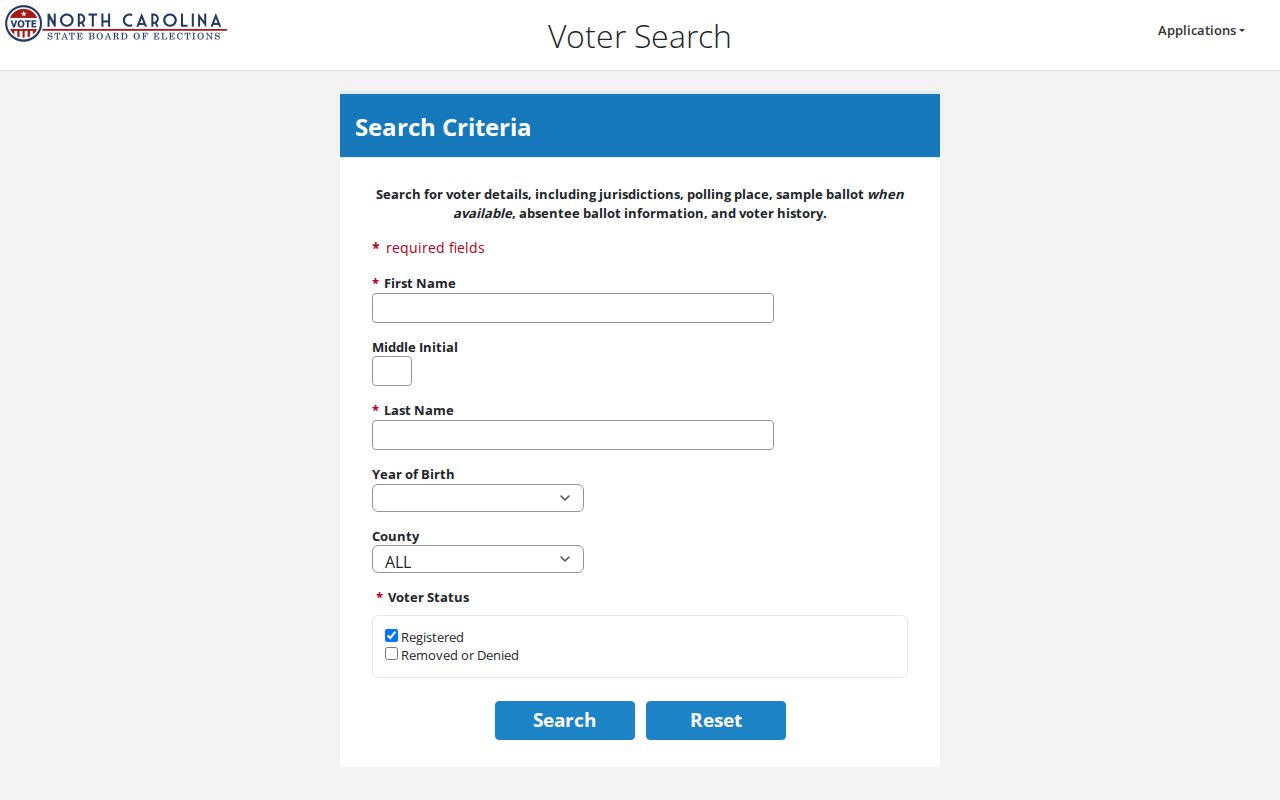
The NC Voter Lookup requires first and last name, with optional middle initial, year of birth, and county filters. At least one status box, Registered, Removed, or Denied, is required. A returned record can provide registration details, jurisdictions, polling place, sample ballot information when available, absentee information, and voter history. It is an election record, not a general list of Jacksonville households.
The state makes current voter files available through its voter-registration data page, with weekly Sunday-evening updates. Those files can include status, address, county, precinct, districts, and party, but exclude birthdate, Social Security number, and driver-license number. Protected addresses, military-related exceptions, inactive records, and changes after a download mean a result needs careful reading.
The official NC Voter Lookup shows the name, county, year, and status fields used for this Jacksonville residents directory source.
Jacksonville Deed Index Transition
The Onslow Register of Deeds says deed books reach from 1734 to the present, but online date windows are narrower. The certified-date page observed consolidated real-property records from 1995 forward and a pre-95 real-estate path for 1977 through 1994. The ROD FAQ lists Indexed Records, Quick Name, Advanced Name, Property, Book/Page Number, File Number, Date Range, Pre-1976 Dates, and Certified Dates. That distinction prevents a missing online result from being mistaken for a missing historical deed.
A June 2026 portal notice says PropertyCheck replaced the older interface after May 4, 2026. Confirm the active interface before following an old click path. When a chain stops online, use the current deed's derivation clause, reverse-search the earlier grantor, and shift to book and page research, the ROD counter, State Archives, or local-library microfilm as the dates require.
Note: PropertyCheck alerts report a document after recording; the county's warning says they are not a prevention tool for deed fraud.
Current Jacksonville Resident Sources
Each current Jacksonville record source has a narrow scope. Property data usually identifies tax owners and parcels. Voter data reflects registration. The deed index identifies parties to recorded instruments. The city directory is for public-facing staff, not citywide residents. Use the source that matches the question, and preserve its date and field labels when comparing it with another record.
| Jacksonville source | What it can establish | Custodian | Access route |
|---|---|---|---|
| Tax and property record | Parcel, owner field, situs, values, deed reference | Onslow Tax Office | Tax Search and property materials |
| Voter lookup | Public registration and election geography | NC State Board of Elections | Individual lookup or weekly file |
| Recorded-instrument index | Grantor, grantee, document date, book/page | Onslow Register of Deeds | Index, counter, and request routes |
| City staff directory | Public employee name, title, and office contact | City of Jacksonville | City directory by category or name |
| Professional or business listing | Public license or filing role | State boards or Secretary of State | Board and filing portals |
Commercial lookup services may combine data from many sources, but their display can be old, incomplete, or unclear about custody. Official rolls are usually slower to compare, yet they show the agency and the record context. For one-person confirmation, use the focused Jacksonville resident lookup process instead of treating a compiled name result as proof.
Jacksonville Court Index and File
The NC Courts Portal supports name and case-number research for criminal, civil, special-proceedings, and estate information. Official court help confirms those concepts, but the live page did not expose stable current dropdown labels during the research review. Online case information is an index-level lead. It is not the whole file, and a same-name result is not positive identification.
Onslow went live with eCourts on February 3, 2025, and local kiosks followed in June 2025. For a file, copy, or older record, use the Onslow County courthouse and Clerk of Superior Court. Public terminals add defendant, case-number, victim or witness paths for criminal matters, with civil and estate routes at the clerk. Record county, filing date, party role, and case type before relying on a result.
Jacksonville Vital Record Routes
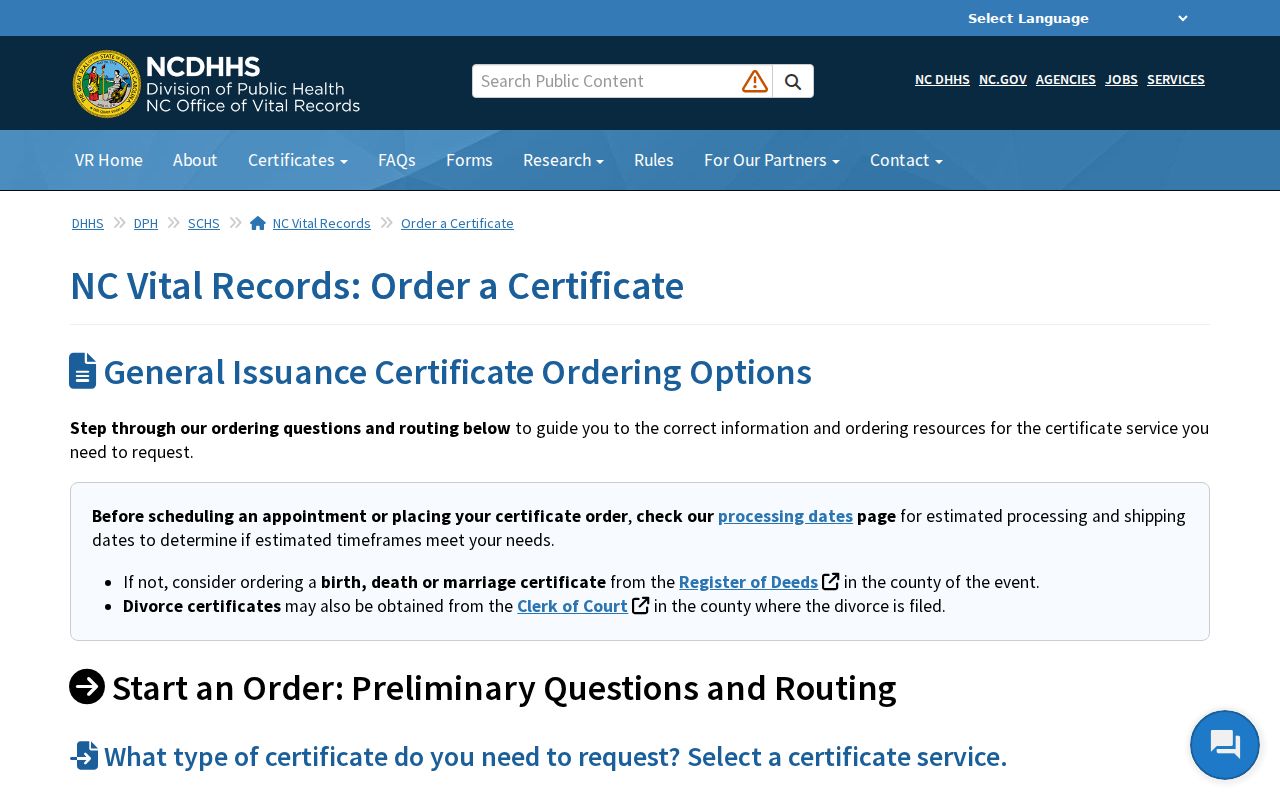
Birth, death, and marriage records are not open name-and-address rolls. The Onslow Register of Deeds can issue local certificates under relationship and identification rules, while NC Vital Records handles state ordering routes. The ROD lists same-day in-person service for qualifying requests and a local certified-copy price of $10. State mail searches are $24 for a three-year period and are nonrefundable. An applicant must supply event facts and meet the applicable relationship or legal-interest rule.
North Carolina's official vital-record ordering page shows the available event types for this Jacksonville residents directory route.
State-held periods begin in 1913 for births, 1930 for deaths, 1962 for marriages, and 1958 for divorces. Older research shifts to the county ROD, filing clerk, or State Archives. North Carolina General Statute 130A-93 controls original and index access, so do not assume that age alone makes an event record openly searchable.
Jacksonville Historical Directory Shelves
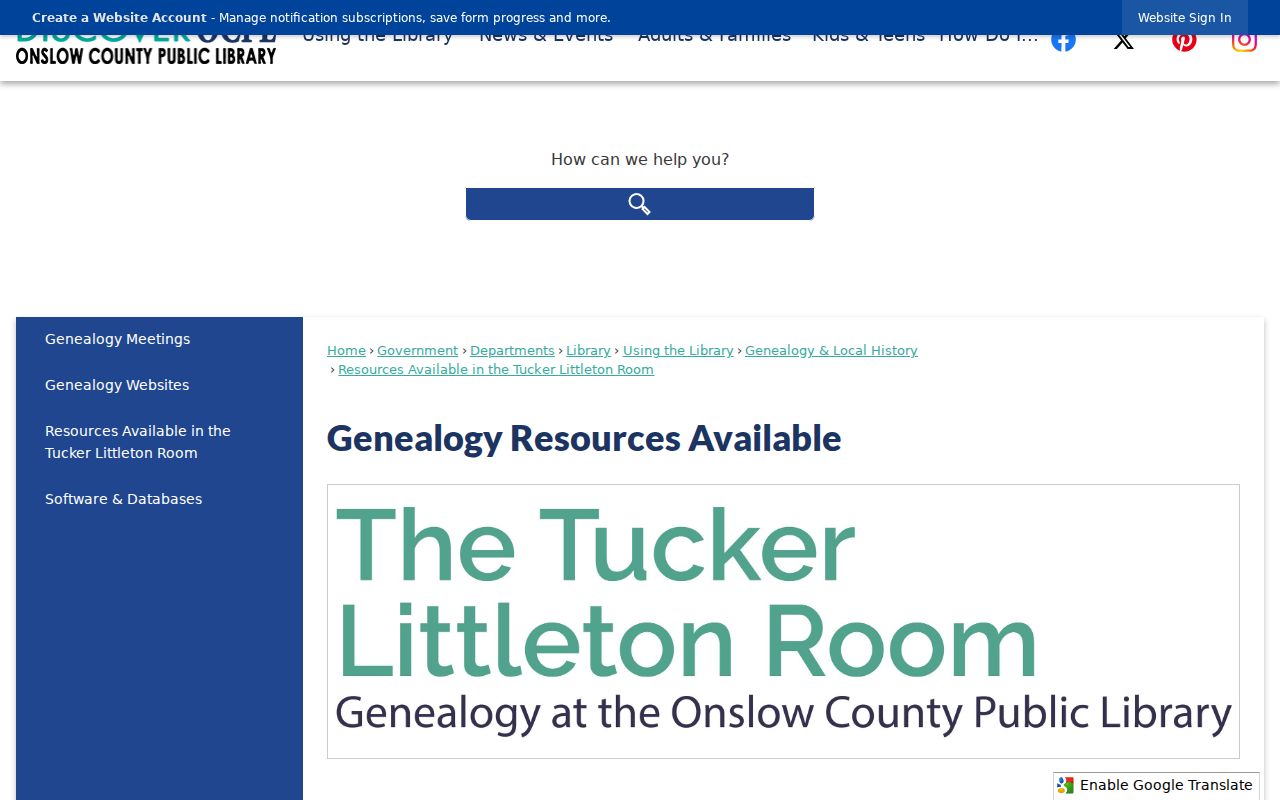
The Tucker Littleton Room at Onslow County Public Library is Jacksonville's primary in-person local-history stop. Its listed holdings include Jacksonville newspapers from 1938 forward, telephone books from 1957 forward, and city directories from 1960 through 2019. The room has a genealogy workstation, microfilm reader, vertical files, and staff assistance. Its Main Library location is 58 Doris Avenue East, and copies or prints are listed at $0.20 per page.
DigitalNC adds searchable editions from 1948, 1957, 1958, 1960, and 1961. A directory places a household or subscriber in a time-stamped editorial publication. It does not prove residence for every day of that year. The full editions, publishers, and reading method are collected with the Jacksonville city directories.
The Tucker Littleton Room resources page documents the local directories, microfilm, and newspaper holdings.
Jacksonville Householder Directory Clue
The 1960 Hill directory has a particularly useful Jacksonville feature. Its householder department arranges street and avenue entries in address order and shows names opposite addresses, intersecting streets, owner or tenant notation, and phone numbers. It is the documented local substitute for a separate reverse or criss-cross directory. The alphabetical department supplies adult resident or firm names, marital-status marker, occupation, and address; Yellow Pages and a numerical telephone section complete the volume.
DigitalNC's 1948 Jacksonville directory record is one of the digitized editions that can be compared with later Hill volumes.
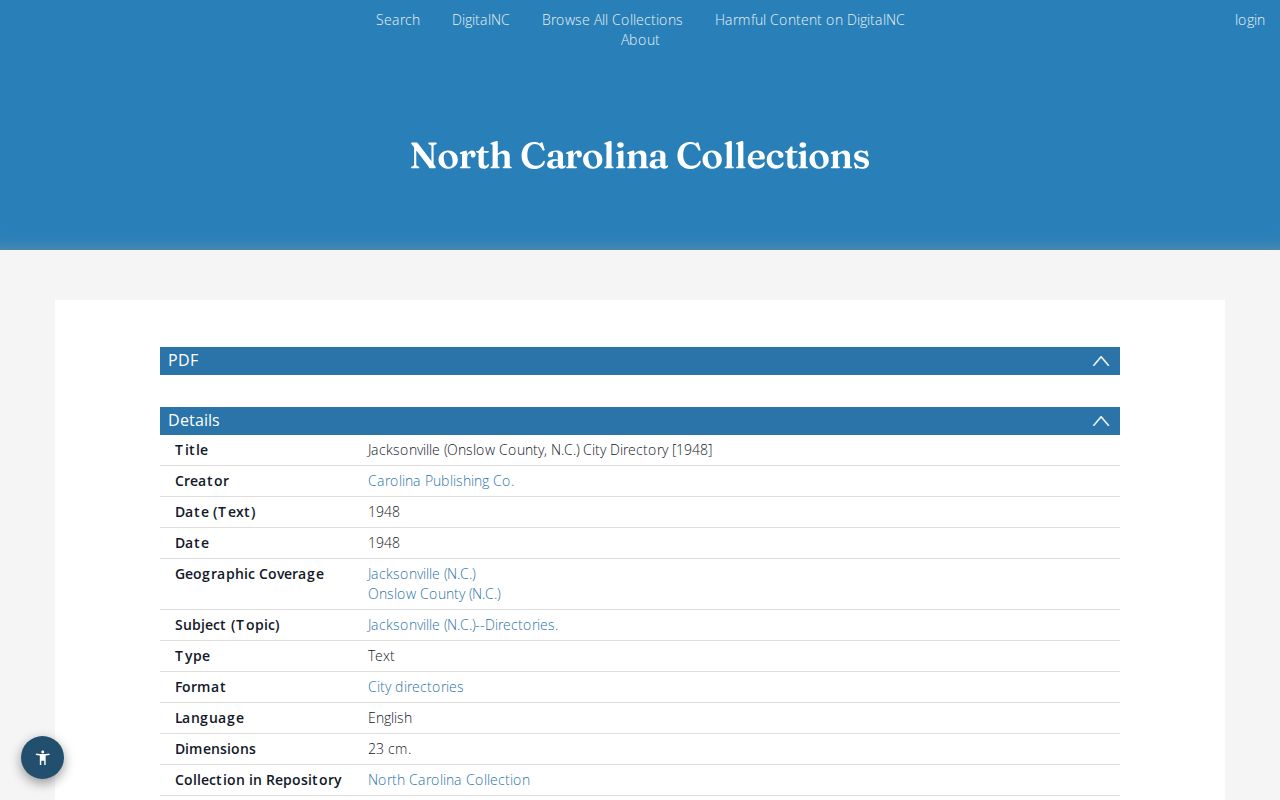
Telephone coverage was never a complete resident count. The 1948 volume's introduction mentions about 1,000 phones, which illustrates why a missing subscriber entry should not be used to rule someone out.
Jacksonville Records Have Boundaries
North Carolina's Public Records Law, Chapter 132, generally permits inspection and copying at reasonable times. It does not require an agency to create a custom Jacksonville resident list. A useful request identifies an existing record, time period, office, address, parcel, or case number, the preferred format, and contact method. Onslow routes many general administrative requests through NextRequest; court, vital, and ROD matters keep their own custodian routes.
Some data remains protected: Social Security and driver-license numbers, full birth data, adoption files, protected voter addresses and signatures, victim information, and confidential court material. The North Carolina Address Confidentiality Program can substitute a participant's mailing address for safety. A tax mailing address, voter address, or USPS ZIP result also does not prove that someone occupies a parcel. Stop at the privacy boundary rather than trying to fill the gap with assumptions.
Jacksonville's record trail also changes by era. The Onslow deed-book horizon begins in 1734, while the State Archives has separate collections for land grants, court minutes, estates, guardians, and wills. The Tucker Littleton Room bridges that older material with early microfilm, census access, newspapers from 1938, telephone books from 1957, and city directories from 1960 through 2019. Modern GIS layers, voter files, and electronic court indexes each update on their own schedule. Keep the source date with every Jacksonville finding, especially when an older street description, military postal place, or township does not match a current city label.
Note: Preserve the custodian, record date, and source link with each Jacksonville finding so another person can verify it independently.